Lake Elmo MN Roofing Contractor — Asphalt, Metal & Complex Rooflines
Roofing the Custom Home Footprint in Lake Elmo
Lake Elmo's residential character is shaped by larger lot footprints, conservation areas, and a mix of custom home construction spanning several decades of building activity. Properties in the community range from rural estates built in the 1970s and 1980s on multi-acre parcels to more recent custom construction on wooded lots that preserved much of the original vegetation. That mix of building eras and site types creates a roofing landscape where the scope of work varies more than it does in denser planned communities — each property has its own combination of roofline complexity, lot drainage behavior, and building age that determines what a replacement actually requires. The larger rooflines common on Lake Elmo's custom homes involve more linear footage of ridge, valley, hip, and rake than a standard production build, which means more detailing points where workmanship and material quality determine long-term performance. Washington County's freeze-thaw cycle affects these properties the same way it affects all east metro communities, but the additional complexity introduced by steep pitches, complex valley intersections, and variable drainage distances on larger lots means that installation precision carries more weight here than on a straightforward gable-end suburban roof. Homeowners in Lake Elmo are typically planning extended occupancy and making material selections that reflect a long-term investment calculation rather than a minimum-cost replacement — a planning horizon that justifies a more thorough upfront assessment than a standard inspection protocol delivers.
Wetland Adjacency and What It Means for Long-Term Performance
Wetland adjacency is a defining site condition across a significant portion of Lake Elmo's residential landscape, and its effects on roofing systems accumulate gradually rather than appearing as immediate failures. Properties with wetland areas along their perimeter or on adjacent parcels experience higher ambient humidity through the growing season, which affects the biological load on shingle surfaces facing north and northeast where shade and moisture overlap. Established tree canopy — common on Lake Elmo's larger and older lots — compounds this by blocking the direct sun that would otherwise cycle moisture off the shingle surface between precipitation events. The result is that shingles on shaded, wetland-adjacent slopes tend to develop algae and moss growth earlier in their service life than manufacturer lifecycle projections assume, and that biological accumulation shortens the effective replacement window by retaining moisture at the shingle surface. For properties where this pattern is established, algae-resistant shingle products and ventilation optimization are both part of the replacement planning conversation rather than afterthoughts. Lake Elmo's rural road infrastructure also introduces access planning considerations for replacement projects, particularly on properties with longer driveways or limited staging areas for material delivery and equipment. A site visit before the project is scoped allows those logistics to be worked out in advance rather than on the day of installation, keeping the replacement timeline predictable regardless of how the property sits relative to the road.
Custom and Estate Home Roof Replacement
Roof replacement on Lake Elmo's custom and estate homes requires a project scope that accounts for the specific complexity of the structure rather than applying a standard production-build process. Custom homes in the area routinely involve steep pitches, complex valley intersections, multiple penetrations, and roofline transitions between sections built at different elevations — all of which create detailing demands that increase labor intensity and reduce the tolerance for installation shortcuts. On properties that have been custom-built, the roofline geometry sometimes reflects design decisions that prioritize aesthetics over drainage efficiency, which means some valley configurations require additional care at installation to prevent the pooling and redirection problems that would occur with a standard weave or cut valley detail. Material selection on Lake Elmo properties typically involves a longer evaluation than a standard suburban replacement because the investment calculus on a high-value property supports premium options. Standing seam metal systems, Class 4 impact-rated architectural shingles, and synthetic shake products all have appropriate applications on Lake Elmo's custom homes, and the choice between them depends on specific exposure, roofline geometry, and the owner's planning horizon for the property. The upfront inspection process on these properties goes deeper than a surface assessment — it includes attic access, deck condition evaluation at the ridge and valley zones, and ventilation analysis before a scope gets written, because the cost of discovering a structural problem mid-installation on a complex home is significantly higher than addressing it in the planning phase.
Algae-Resistant Products for Shaded and Wetland Sites
Shingle selection for Lake Elmo properties with significant tree canopy or wetland exposure needs to account for the biological load those conditions create. Standard architectural shingles without algae-resistant granule treatments begin to show black streaking on north and east-facing slopes within five to eight years on heavily shaded lots — not because the shingles are failing structurally, but because copper-free granule surfaces don't resist the algae species that thrive in persistently moist environments. Algae-resistant shingle products with copper-infused granule layers extend the clean appearance and surface life significantly in these conditions, which matters on Lake Elmo properties both for aesthetics and for the underlying moisture management the shingle layer is designed to provide. Beyond the product selection, ventilation optimization is part of the replacement planning conversation on properties where moisture accumulation is a documented concern. Attics that hold heat in winter and humidity in summer create the temperature differential that drives moisture into the roof system from below, and if ridge and soffit ventilation aren't balanced to move that air effectively, shingle life is shortened from underneath regardless of what product is installed on top. The moss treatments and power washing services that address biological growth symptoms are a recurring cost on under-ventilated, shaded properties — a roofing scope that addresses the cause rather than the symptom avoids that maintenance cycle going forward.
Complex Roofline Detailing and Valley Work
Valley detailing on Lake Elmo's more complex rooflines is where installation quality has the most direct impact on long-term performance. A valley is the lowest point in the roofline geometry — the convergence of two slopes where the entire drainage volume from both surfaces concentrates before moving to the gutter system. On a Lake Elmo custom home with multiple dormers, a complex hip and valley pattern, or additions that created secondary drainage planes, each valley intersection has to be evaluated for flow volume, direction, and the likelihood of ice dam formation in the section directly upslope. The ice and water shield specification in Minnesota requires coverage at eaves and valleys, but the coverage distances that code minimums specify are often insufficient for the drainage geometry of a complex roofline — particularly at valley intersections where two slopes of significant surface area converge. Open valley configurations with metal valley flashing provide a more durable and cleanable drainage channel than woven or cut valley shingle details, which matters on Lake Elmo properties where leaf and needle accumulation in valley channels is a recurring maintenance issue from surrounding tree canopy. The layout plan for a complex replacement on a Lake Elmo property specifies valley configuration, ice and water shield extension distances, and penetration flashing details before the first shingle goes down — because the sequence and coverage decisions made at the start of installation determine how the system performs across the full replacement cycle.
Comprehensive Residential Roofing Services in Woodbury
Tailored to Your Needs
Woodbury Roofing Pros offers the full range of residential roofing services Washington County homeowners need — from full roof replacements on aging 1990s and 2000s housing stock to targeted storm damage repairs, HOA-compliant material installations, roof ventilation corrections, and specialty services including chimney flashing repair and flat roof systems. Every service is permitted where required and backed by a written workmanship warranty.
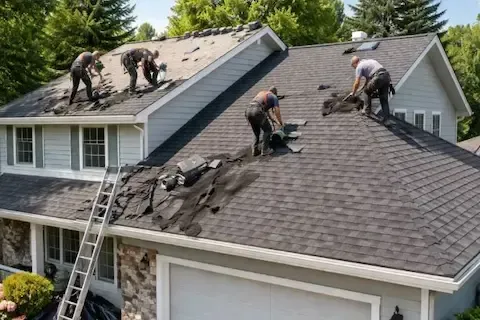
Full roof replacement for Woodbury's aging 1990s and 2000s housing stock, including permit and HOA documentation.
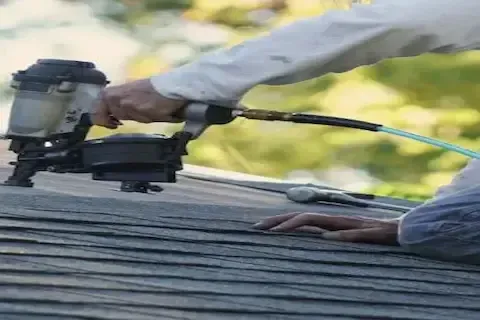
Accurate roof repair diagnosis for Washington County homeowners — we find the source and fix it right.
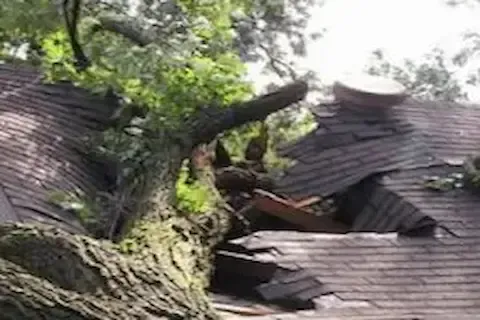
Storm damage assessment, insurance adjuster coordination, and full roof restoration in Woodbury MN.
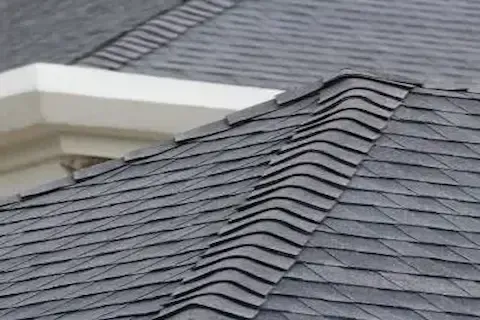
Architectural and Class 4 impact-resistant shingle installation for Woodbury homes and HOA communities.
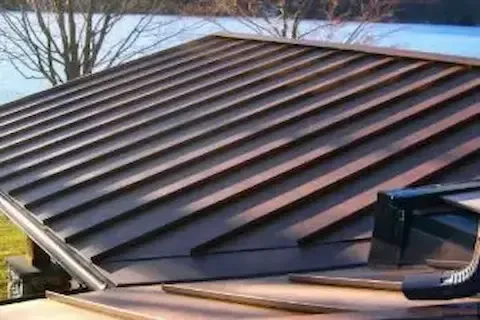
Standing seam and exposed fastener metal roofing for Woodbury homeowners choosing a long-life system.

Written roof inspection reports for Woodbury homeowners — no inflated quotes, no scare tactics.
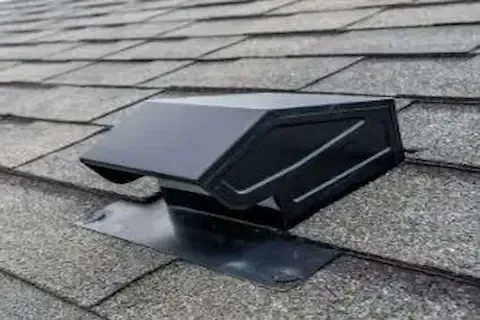
Soffit, ridge, and power ventilation corrections that protect shingles and reduce energy costs in Minnesota.
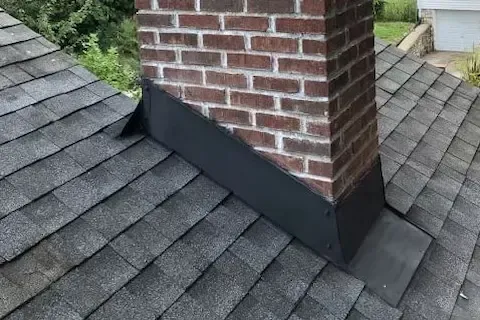
Chimney cap resealing, step flashing, counter flashing, and valley flashing repair across the east metro.
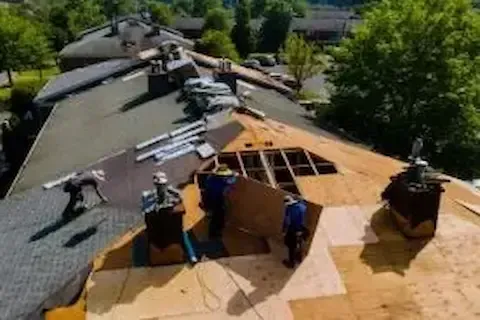
HOA roofing documentation, color approval support, and code-compliant installs in Woodbury communities.
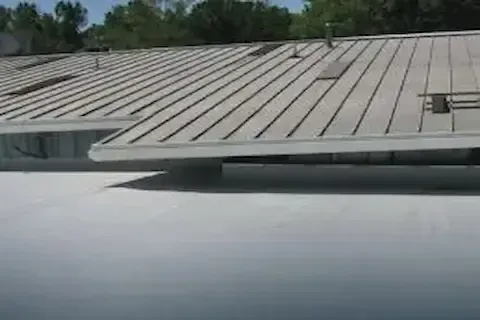
TPO, EPDM, and modified bitumen flat roof systems for garages, additions, and low-slope structures.
Frequently Asked Questions
Residential Roofing can be complex, and we’re here to provide answers to common questions. Here are some frequently asked questions from our clients.
Frequently Asked Questions about Roofing Contractor Woodbury MN
How do I know if my Woodbury roof needs replacing or just repairs?
Most Woodbury homes built in the 1990s and early 2000s used 25 to 30 year architectural shingles that are now reaching the end of their service life. If you are seeing granule loss in the gutters, cracked tabs, or recurring leaks after heavy rain, those are reliable signs that replacement makes more financial sense than continuing to repair. We inspect the deck condition as well, because Washington County's freeze-thaw cycles accelerate plywood deterioration once shingles lose flexibility.
How does the HOA approval process work for a roof replacement in Woodbury?
Most HOA communities in Woodbury require a written application with material samples and color swatches submitted to the architectural review committee before any work begins. Approval timelines vary by community but typically run two to four weeks. We assist homeowners in preparing the documentation, selecting materials that meet the HOA's published specifications, and scheduling the inspection after installation. We have worked through this process for communities across Woodbury's planned neighborhoods.
What roofing materials hold up best in Washington County winters?
Impact-resistant Class 4 asphalt shingles are the most practical choice for the majority of Woodbury homes given Washington County's hail exposure and freeze-thaw climate. They qualify for insurance discounts with most Minnesota carriers and perform well across the temperature swings the east metro experiences. For homeowners planning to stay long-term, standing seam metal is worth the premium investment given its 50-plus year lifespan and superior performance in heavy snow load and ice dam conditions.
How long does a full roof replacement take in Woodbury MN?
A standard residential roof replacement in Woodbury typically runs one to two days for most single-family homes. Larger homes with complex rooflines, steep pitches, or multiple penetrations may extend to three days. We stage materials the day before when possible so the actual tear-off and install stays on schedule. Washington County permit inspections are scheduled ahead of time to prevent delays at closeout.
Does homeowner's insurance cover storm damage roof repair in Minnesota?
Yes, in most cases. Minnesota homeowners' policies cover sudden storm damage from hail, wind, and falling debris. The process starts with a claim filed directly with your carrier, followed by an adjuster inspection. We document the damage before any temporary repairs and can meet your adjuster on-site to make sure nothing is missed. What insurance typically does not cover is deterioration from age or deferred maintenance, which is why distinguishing storm damage from wear is important to capture before filing.
Do I need a permit to replace my roof in Woodbury MN?
Yes. Woodbury and Washington County both require a building permit for full roof replacements. The permit confirms the installation meets Minnesota Residential Code requirements including deck fastening schedules, ventilation ratios, and underlayment specs. We pull the permit on your behalf, schedule the required inspections, and make sure the final sign-off is in place before the project closes. This protects you at resale and satisfies HOA documentation requirements where applicable.
Need Residential Roofing?
What Our Satisfied Clients Have to Say About Woodbury Roofing Pros
We pride ourselves on delivering great results and experiences for each client. Hear directly from home and business owners who’ve trusted us with their Residential Roofing needs.

Had our 1998 Woodbury home re-roofed last fall. The crew pulled the permit, handled our HOA color approval, and finished in one day. The estimate was itemized and matched the final invoice exactly. No surprises. Washington County inspector signed off without any issues.
Mark T
After the hail storm last spring I called three companies. Woodbury Roofing Pros was the only one that walked our adjuster through the damage before he wrote the estimate. We got full replacement coverage and the repair was completed two weeks later. Very professional process from start to finish.
Sandra Kowalski
Our Stonemill Farms HOA requires a detailed application and color sample approval before any roofing work. Woodbury Roofing Pros handled all of it. They knew exactly what the committee required and got it right the first time. The installation was clean and they hauled everything out the same day.
Jeff Larson
The Trusted Residential Roofing Expert Near You
Ready to hear more about expert services at Woodbury Roofing Pros?
Contact us today to receive a detailed, no-obligation quote.

Woodbury & the Twin Cities metro
Monday-Friday: 9am-5pm, Saturday: 11am-3pm
