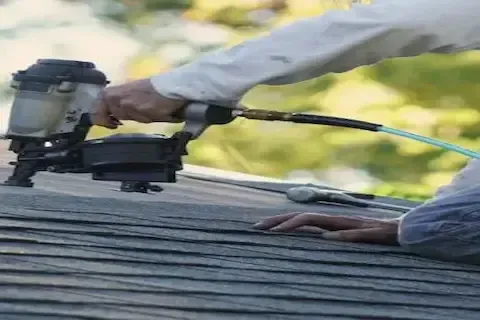
Plumbing Pipe Boot Leak Repair in Woodbury MN Homes
A cracked or deteriorated pipe boot is one of the most overlooked causes of roof leaks in Woodbury, MN homes. Because the failure point sits low on the roof deck and water travels along the pipe before it ever drips onto a ceiling, homeowners often spend months chasing the wrong source. By the time the stain appears in a bathroom or utility room, the decking beneath may already be saturated. Understanding what a pipe boot is, how it fails, and what a proper repair looks like can save you from a costly cycle of patching and re-patching.
What Is a Pipe Boot and Why Does It Matter
A pipe boot — sometimes called a plumbing vent flashing or pipe jack — is a prefabricated collar that seals the gap between a plumbing vent stack and the surrounding roofing material. Every home in Woodbury has at least one, and most have several. The boot is typically made from a lead collar bonded to an aluminum or galvanized steel base, or from a neoprene sleeve secured over a metal flange. Its job is simple: keep water from running down the pipe and under the shingles.
The challenge is that neoprene and lead both degrade. Neoprene boots exposed to Minnesota's freeze-thaw cycles commonly crack within 15 to 20 years. Lead boots can be bent back into shape after they loosen, but they corrode and develop pinhole leaks over time. When either type fails, every rainstorm and every snowmelt event introduces water directly to your roof deck.
How Minnesota Weather Accelerates Pipe Boot Failure
Woodbury sits in Washington County where winter lows routinely fall below zero and summer UV exposure is aggressive. That climate combination is particularly hard on rooftop rubber. Neoprene stiffens in extreme cold and becomes brittle enough to crack when it flexes under wind load or when ice shifts around the pipe. In summer, UV radiation breaks down the polymer chains that give neoprene its flexibility, so by the time a boot has seen ten or fifteen Minnesota winters, the collar around the pipe is often visibly checked or torn.
Ice damming compounds the problem. When ice backs up along a Woodbury roofline and water pools, it finds every low point it can. A boot collar that has even a hairline crack offers no meaningful resistance. The water wicks under the flange, saturates the felt underlayment, and works into the decking before anyone suspects the boot.
Identifying a Failed Pipe Boot Without Getting on the Roof
You do not always need to get on the roof to suspect a pipe boot leak. Interior clues come first. Look for water staining on ceilings near bathrooms, utility rooms, or any room directly below a plumbing vent. The stain is often circular and slow-growing because the leak is intermittent — only active during rain or snowmelt. If the stain correlates with precipitation events rather than plumbing use, a roof penetration is almost always the culprit.
From the ground, binoculars can reveal a lot. A neoprene boot that has failed often shows visible cracking or a gap between the collar and the pipe. Sometimes the collar has pulled away from the pipe entirely. Lead collars that have loosened sometimes show daylight between the boot and the shingle surface. Any visible separation or surface cracking is cause for a closer inspection.
If you are comfortable with a safe ladder setup, the base flange of the boot should sit flat against the shingles with no raised edges. Caulk applied around the collar is a red flag — it usually means someone tried to extend the life of a failing boot rather than replace it. Caulk-patched boots reliably fail again within one to three seasons. For comprehensive information on diagnosing entry points across your roofline, the roof repair guide for Woodbury homeowners covers the full range of common failure zones.
What a Proper Pipe Boot Repair Actually Involves
A correct pipe boot repair is a replacement, not a patch. The failed boot is removed by carefully lifting the surrounding shingles, backing out the fasteners that secure the base flange, and sliding the old boot up and off the vent pipe. Any damaged underlayment is cut out and replaced before the new boot goes in.
Matching shingle reinstallation is a detail many homeowners underestimate. Shingles lifted to access the boot flange sometimes crack during removal, particularly if the roof is older and the shingles are brittle. A thorough repair means having matching replacement shingles on hand. In Woodbury's established neighborhoods, many homes carry shingles from architectural product lines that have cycled out of production. A roofer who takes the repair seriously will work to find the closest available match in granule color and profile rather than leaving a visually mismatched patch.
The new boot should be a high-quality two-piece or flexible EPDM unit sized to the pipe diameter. EPDM outperforms neoprene in cold-climate applications and carries a significantly longer service life. The base flange is nailed through the shingles below and covered by the shingles above, following the same water-shedding logic as the original installation. No sealant is applied around the collar itself — the mechanical fit of the boot and the overlapping shingles should handle water management without caulk.
Common Mistakes That Lead to Repeat Leaks
The single most common mistake is caulking over a cracked boot instead of replacing it. Caulk does not bond reliably to weathered neoprene, it traps moisture against the flange, and it fails within a season or two. If a previous contractor applied a bead of roofing caulk around your pipe collar, the repair was incomplete.
Undersized replacement boots are another recurring problem. A boot sized for a three-inch pipe installed on a four-inch vent stack will not seat correctly and will almost immediately begin to leak at the collar. Matching the boot to the actual pipe diameter is non-negotiable.
Skipping underlayment inspection is a third error. Once water has been entering through a failed boot, the felt or synthetic underlayment beneath it is often compromised. A repair that only swaps the boot without checking the decking and underlayment condition leaves hidden damage that will resurface as a leak from a different angle.
When to Address Multiple Boots at Once
If your Woodbury home was built in the 1980s or 1990s and you are replacing one failed neoprene boot, it is worth having all boots on the roof evaluated at the same time. Neoprene from that era ages at roughly the same rate across a roof, so if one boot has failed, others are likely within a season or two of failure. Addressing them together during a single service visit reduces mobilization cost and prevents a cycle of repeated calls for what is essentially the same age-related problem across multiple penetrations.
For homes approaching the 20-year mark in Washington County communities like Woodbury, Lake Elmo, or Cottage Grove, a full penetration audit — including pipe boots, chimney flashing, and any skylight curbs — is a practical investment before the next winter heating season. The Roof Repair services available through a qualified local contractor can include this kind of systematic inspection as part of a repair visit rather than as a separate diagnostic fee.
Closing Perspective
Pipe boot leaks are fixable and, when caught before the decking is saturated, relatively straightforward to repair correctly. The key is treating the repair as a replacement rather than a patch, verifying that surrounding shingles and underlayment are intact, and using a boot material rated for Minnesota's climate demands. If you are seeing ceiling stains that track with weather rather than plumbing use, a failed pipe boot deserves to be the first thing you check.
