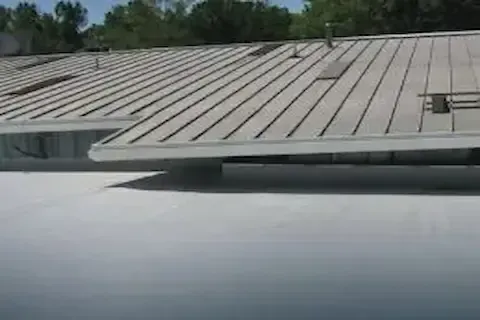
Fall Flat Roof Drainage Prep for Woodbury MN Homes
Flat and low-slope roofs handle water differently than pitched surfaces, and that difference becomes critical once October arrives in Woodbury. Without adequate slope to shed precipitation quickly, these roofs depend entirely on functioning drains, scuppers, and membrane integrity to move water off before temperatures drop. A single blocked drain or compromised seam can turn a routine snowfall into a structural problem. Getting ahead of that risk in fall — before the ground freezes and before the first heavy snow — is one of the most practical investments you can make in a flat-roofed home or addition.
Why Flat Roofs Face Unique Fall Challenges in Woodbury
Woodbury sits in Washington County, where fall weather transitions faster than most homeowners expect. You can have a warm dry week in late September followed by a week of cold rain and an early November freeze. Flat roofs accumulate organic debris from surrounding trees during that same window. Oak, maple, and ash leaves settle into drain baskets, scupper openings, and low points in the membrane — exactly where water is supposed to exit.
Once debris plugs those exit points, water ponds. Ponding water on a low-slope roof is not just a drainage inconvenience. It adds weight, accelerates membrane degradation at seams, and — when temperatures fall below freezing — becomes a sheet of ice that can stress the underlying structure. Minnesota's freeze-thaw cycle in October and November is particularly hard on any standing water that doesn't drain within 48 hours after rain.
Clearing Drains and Scuppers Before the First Freeze
Internal drains on flat roofs have a basket strainer at the membrane level and a secondary clamping ring that holds the membrane in place. Both areas collect debris. Clearing the strainer is straightforward — remove it, clean it, and replace it — but the clamping ring and the drain body below it can hold compacted material that won't flush without manual removal.
Scuppers present a different problem. These are the rectangular openings cut through the parapet wall or edge flashing that allow water to exit at the membrane surface. Debris doesn't just block the scupper opening — it packs into the flashing receiver and the through-wall sleeve. Clearing a scupper means checking the full depth of the opening, not just the visible face. In Woodbury homes with decorative brick or stone parapets, this also means checking that the exterior scupper outlet hasn't been painted or caulked shut during a previous exterior project.
After clearing every drain and scupper, run water from a garden hose at each location and confirm it exits the building where it should. This test is simple but it catches back-pitched conditions and partially crushed drain bodies that visual inspection misses.
Inspecting Membrane Seams and Flashing Edges
The membrane — whether TPO, EPDM, or modified bitumen — expands and contracts with temperature. Seams between membrane sheets and termination edges at parapets, curbs, and penetrations are the first places to show separation. Fall is the right time to inspect these areas because the membrane is still flexible enough for repair work. Once ground temperatures drop below 40°F consistently, adhesives and lap sealants don't bond reliably without heat-weld alternatives.
Look for any seam edge that has lifted, any termination bar that has pulled away from the wall, and any spot where the membrane has bubbled or separated from the insulation below. Probe seam edges with light finger pressure — a properly bonded seam does not flex. Anything that moves deserves closer attention before winter.
Flashing at roof penetrations — HVAC curbs, plumbing vents, skylights — is another priority. The caulk and cover-strip details at these locations degrade faster than the field membrane. Cracked caulk at a vent flashing can admit water that tracks along the penetration sleeve and shows up as a ceiling stain weeks later, after the source is buried under snow.
Addressing Ponded Areas Before Snow Load Arrives
Some flat roofs in Woodbury have low points that pond regularly — not because drains are blocked, but because the roof surface has deflected slightly over time or was installed with inadequate slope. If your roof holds visible water 72 hours after rain with clear drains, that's a structural drainage problem, not a maintenance problem.
Short-term solutions for minor low points include tapered insulation crickets installed over the existing membrane to redirect water toward drains. This is a repair that can be completed in fall if the membrane condition is otherwise sound. If the ponding area is large or the deflection is significant, a roofing professional should evaluate whether the decking below has been compromised. Water sitting above structural decking over many seasons can cause wood rot or corrosion in steel decking that doesn't show on the surface until load is applied.
For homeowners considering longer-term upgrades, our Flat Roof Installation resource covers membrane options, drainage design standards, and slope requirements that Minnesota code references for low-slope residential construction.
Common Mistakes Homeowners Make With Fall Flat Roof Prep
The most common mistake is treating flat roof maintenance like asphalt shingle maintenance — a visual pass from the ground and a mental note that it looks okay. Flat roofs require hands-on contact to evaluate properly. Water doesn't announce itself the way a missing shingle does.
The second mistake is applying caulk or lap sealant over existing failed sealant without removing the degraded material first. Layering sealant on top of a failed joint creates the appearance of a repair while leaving the actual water pathway open. Fall is the wrong time to make cosmetic repairs that won't survive freeze-thaw.
The third mistake is neglecting the interior side. Flat roofs on additions and porch enclosures in Woodbury often have insulation installed against the roof deck from below. If that insulation has absorbed moisture over the summer, it needs to be identified before it freezes. Compressed or wet insulation loses R-value and can create condensation problems throughout winter.
What Woodbury's Climate Demands From Low-Slope Roofs
Washington County averages over 50 inches of snow annually, and much of that falls in events that load flat roofs quickly. A wet snow event at 20 pounds per cubic foot on a roof with blocked drains and standing ice below can approach design load limits on residential additions. This isn't a theoretical concern — it's the scenario that drives most post-winter flat roof failures in this region.
Fall prep that clears drainage paths, seals seam edges, and identifies low points before the first freeze directly reduces that risk. If you want to understand what a properly installed low-slope system looks like as a baseline for comparison, the flat roof installation guide walks through membrane selection, drain placement, and insulation requirements specific to Minnesota climates.
Timing Your Fall Inspection
The optimal window for flat roof inspection and repair in Woodbury runs from mid-September through mid-October. You have reliable membrane flexibility, workable adhesive temperatures, and enough dry weather to complete any repairs before the next rain event. Waiting until November compresses your options and limits what adhesive-based repairs will hold reliably without heat-welding equipment.
Schedule your inspection early in that window, make a list of what needs attention, and prioritize drain clearance and seam repair over cosmetic issues. If the membrane is sound and water moves freely off the roof, it will handle a Woodbury winter far better than a roof with a fresh coat of roof coating over failing seams and blocked scuppers.
