Tear-Off vs Layover Roof Replacement in Woodbury MN
When it comes time to replace your roof in Woodbury, one of the first decisions you'll face is whether to strip everything down to the deck or simply lay new shingles over the existing ones. The difference matters more than you might expect — for your home's structure, your warranty coverage, and compliance with Minnesota building code. Understanding the trade-offs before your contractor shows up helps you ask the right questions and avoid a decision that could cost you far more down the road.
What Tear-Off and Layover Roofing Actually Mean
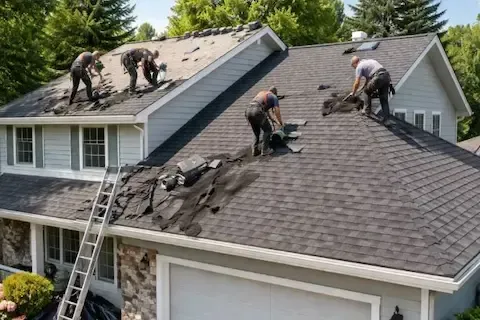
A tear-off replacement means removing all existing shingles, underlayment, and in some cases deteriorated decking before installing the new roofing system. It gives your contractor a clean, fully inspectable surface to work from.
A layover — sometimes called a re-roof or overlay — means installing a new layer of shingles directly on top of the existing ones. No stripping, no disposal, no deck inspection. The appeal is obvious: it's faster and often cheaper upfront. But those savings come with real strings attached, and in many situations the method isn't even legally available to you.
What Minnesota Building Code Says About Layovers
Minnesota follows the International Residential Code, which limits residential roofs to a maximum of two shingle layers. That means if your Woodbury home already has two layers in place — a situation common in neighborhoods where homes changed hands multiple times and had storm work done over the years — a layover is not a legal option. Your contractor must tear off before re-roofing.
Even if you currently have only one layer, Washington County permit requirements apply to most full replacements. Pulling a proper permit and having the work inspected isn't optional. A contractor who skips this step is putting you at risk when you try to sell or make an insurance claim later. If you're planning a Roof Replacement, verifying that the work will be permitted and code-compliant is one of the most important questions you can ask before signing anything.
The Hidden Problem With Layovers: Deck Condition
One of the strongest arguments against layovers in Minnesota is the climate itself. Woodbury sits in a zone with significant freeze-thaw cycling, heavy snow loads, and occasional ice dams along roof edges. These conditions are hard on decking over time. Rotted or delaminated plywood, soft spots from moisture intrusion, and failed areas around penetrations are all common findings during a tear-off — and none of them are visible when you're laying new shingles over old ones.
When a contractor can't see the deck, they can't address what's failing underneath. A roof inspection before the work is scoped, including attic access where it is available, is the only way to know what condition the deck is actually in before the shingles come off. You end up with a new roof surface installed over a compromised foundation. The new shingles may fail prematurely, fasteners may not hold properly, and the underlying rot continues to spread. By the time the problem becomes obvious from inside the attic or on your ceiling, the damage is typically far more extensive than it would have been if caught at installation.
Warranty Implications That Most Homeowners Miss
Major shingle manufacturers — GAF, Owens Corning, CertainTeed — all have specific language in their warranty terms regarding layovers. Most limit or entirely void enhanced warranty coverage when shingles are installed over an existing layer. If you're paying for a premium shingle product and expecting a 30- or 50-year system warranty, a layover installation may strip that protection down to the bare minimum or nothing at all.
Beyond manufacturer warranties, homeowners insurance is another factor. Some carriers in the Minnesota market treat layovers differently when evaluating claims after hail or wind events. If an adjuster determines that pre-existing conditions beneath the new layer contributed to damage, your claim exposure changes. A tear-off with documented deck inspection creates a clean paper trail that protects you in those situations.
When a Layover Might Be Considered
There are limited circumstances where a layover could be evaluated. If your existing shingles are laying flat, in good condition, and there is only one current layer, the structural load will remain within code tolerance with the addition of a second. Budget constraints and timing — such as a rental property needing a quick turnaround — sometimes push owners to consider it.
Even in those cases, the realistic long-term math usually doesn't favor the choice. You're deferring the cost of a tear-off, but the deck inspection remains undone, the warranty is compromised, and when you eventually do need to tear off — which you will — you're paying to remove two layers instead of one. That additional labor and disposal cost often exceeds what you saved on the original installation.
What a Professional Tear-Off Includes in Woodbury
A properly executed tear-off in a Woodbury residential setting involves stripping all existing shingles and underlayment, inspecting every section of the decking, replacing any soft or damaged panels, installing code-required ice and water shield along the eaves and in valleys, laying synthetic underlayment across the field of the roof, and then beginning the new shingle installation. Ridge ventilation, flashing at chimneys and walls, and drip edge are all part of the system — not optional additions.
Woodbury's climate makes the ice and water shield requirement especially important. Minnesota code mandates it at a minimum of 24 inches inside the exterior wall line, and experienced local contractors typically extend it further given the ice dam history in this region. That kind of local knowledge matters, and it's one reason reading through a thorough roof replacement guide before you start getting quotes is worth your time.
Making the Right Call for Your Home
For most Woodbury homeowners, the tear-off is the right answer — not because it's more expensive, but because it's more complete. You know what's under your new roof. Your warranties are intact. The work is permitted and documented. Your insurance coverage is protected. And your roofing system is built on a foundation that has actually been inspected, not assumed to be acceptable.
If a contractor is pushing you toward a layover primarily on price without addressing the code limitations, deck condition, and warranty implications, that's a flag worth paying attention to. The right contractor will walk you through exactly what they find when they strip the old material and show you any deck repairs before they proceed. That transparency is a sign that the work is being done properly and that your investment will hold up through the Minnesota winters ahead.
