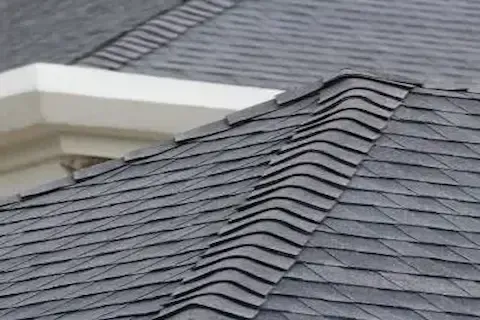
Class 4 Impact Resistant Shingles for Woodbury MN Homes
Woodbury homeowners replacing a roof after hail damage face a decision that goes beyond shingle color and warranty length. Class 4 impact-resistant shingles have become a meaningful upgrade in the east metro, where storm patterns regularly push hail across Washington County. If you've had an adjuster on your roof more than once in the past decade, you already know why the conversation around Class 4 ratings has changed from a niche discussion into a practical one. This article covers what the rating actually means, which products hold up in Minnesota conditions, and how the insurance math typically works for Woodbury-area homeowners.
What the Class 4 Rating Actually Measures
The UL 2218 impact resistance standard is the benchmark most insurers and roofing contractors reference when discussing Class 4 shingles. The test drops a two-inch steel ball from twenty feet onto a conditioned shingle sample, and the product must show no cracking or splitting to earn a Class 4 designation. That's the highest rating in the four-class system.
What this tells you in practical terms: Class 4 shingles are engineered to absorb impact energy without fracturing the mat or granule layer. In a hail event, that resilience matters because granule loss is often the beginning of the end for a standard three-tab or even standard architectural shingle. Once granules wash away from repeated impacts, UV degradation accelerates and water infiltration follows within a few seasons.
It's worth noting that Class 4 is a pass/fail impact test. It does not rate wind resistance, algae resistance, or long-term granule adhesion separately. A shingle can be Class 4 rated and still perform differently from one manufacturer to the next depending on the polymer modifiers, mat thickness, and granule bonding process used. In Woodbury's climate, where freeze-thaw cycles hit the shingle surface hard from November through March, those manufacturing differences show up over time.
Minnesota Insurance Discounts and How They Work in Practice
Minnesota is one of the states where insurance carriers actively offer premium discounts for Class 4 roofs, and the east metro market has seen this become a real part of the roofing conversation. The discount varies by carrier and policy structure, but ranges of ten to thirty percent on the dwelling's roof-related premium component are commonly quoted. Some carriers apply the discount to the full homeowner's policy premium, while others isolate it to the wind and hail portion.
Before assuming a discount is automatic, verify these points with your insurance agent:
- Your carrier must accept UL 2218 Class 4 as qualifying for the discount — most major Minnesota carriers do, but not all regional carriers have the same program
- You'll need documentation from the contractor confirming the specific product installed and its rating
- Some carriers require the discount to be requested at policy renewal or immediately after installation, not retroactively months later
- Policies that include an Actual Cash Value settlement for roofs rather than Replacement Cost Value sometimes structure the discount differently
Woodbury homeowners with carriers like State Farm, Auto-Owners, Travelers, and several regional Minnesota-based insurers have generally found the discount program straightforward to apply. The discount can meaningfully offset the price difference between a standard architectural shingle and a Class 4 product when you calculate it over five to seven years of premium savings.
Products That Perform in East Metro Conditions
Several Class 4 shingle lines have established track records in Minnesota, and contractors working in the Woodbury and Lake Elmo corridor regularly see how they perform after multi-season exposure. A few products that come up consistently in that conversation:
GAF Armor Shield II — A rubber-modified asphalt product with a strong reputation in cold climates. The flexibility added by the polymer modification helps it manage freeze-thaw stress without early cracking. It carries a Class 4 rating and is widely available through east metro suppliers.
Owens Corning Duration Storm — Uses a SureNail Technology strip and modified asphalt to target both impact and wind performance. It's one of the more recognizable Class 4 products at the contractor level in Washington County.
CertainTeed Landmark IR — CertainTeed's impact-resistant line in a traditional architectural profile. It's positioned as a Class 4 option that doesn't sacrifice curb appeal for performance, which matters in Woodbury's newer neighborhoods where HOA aesthetic standards can be a factor.
Malarkey Vista AR — A polymer-modified shingle with both impact and algae-resistant properties. The rubberized mat construction makes it particularly well-suited for homes with mature tree cover, which is common in older Woodbury subdivisions near Ojibway Park and Bailey Road neighborhoods.
When comparing these products, ask your contractor about the specific shingle thickness, the warranty terms on impact damage, and whether the warranty coverage requires installation by a certified contractor. Some Class 4 warranties are more conditional than they first appear. For a broader look at material options and installation considerations, the asphalt shingle roofing guide covers the full spectrum of shingle decisions for Woodbury homes.
Cost Difference and the Payback Calculation
Class 4 shingles carry a price premium over standard architectural shingles. On a typical Woodbury home with 2,000 to 2,400 square feet of roof surface, the upgrade from a standard architectural product to a Class 4 line commonly adds $1,500 to $3,000 to the installed cost depending on roof complexity, the specific products selected, and current material pricing.
The payback calculation depends on three variables: the insurance discount amount, your current annual premium, and whether you hold the property long enough to realize the savings. At a fifteen percent discount on a $2,000 annual policy, you recover $300 per year. Over seven to ten years that covers most or all of the upgrade cost, before accounting for any reduced out-of-pocket deductible exposure from hail events you don't file.
Woodbury's hail history makes that last point relevant. The I-494 and I-694 corridors have been in the path of significant hail events in multiple recent seasons, and homes in the Bailey Road, Settlers Ridge, and Powers Lake areas have seen multiple adjuster visits in a compressed period. A shingle that absorbs impact without filing means no claim on your record and no deductible payment — that's real money that doesn't show up in a simple premium discount calculation.
Working With a Contractor on a Class 4 Project
If you're replacing your roof after a storm, the insurance settlement may already be written around standard architectural shingles. Upgrading to a Class 4 product typically means paying the cost difference out of pocket, which is a reasonable trade-off for many homeowners when the insurance savings and reduced future exposure are factored in. Some contractors include documentation in their proposal that makes it easy to submit the Class 4 upgrade request to your insurer at the same time as the claim settlement.
For new replacements outside of a claim, the conversation is simpler — you're choosing the product you want from the start. Working with a contractor who regularly installs Class 4 products in Washington County means they'll already have the product certifications and warranty documentation your insurer needs.
If you're ready to get specific about which product and installation approach makes sense for your home, Asphalt Shingle Roofing services in Woodbury can walk through the options alongside your insurance carrier's requirements so the upgrade works the way it's supposed to from day one.
